Home / Mystery & Crime / Fuzzing Android: Finding Vulnerabilities in Userspace and the Kernel
Mystery & Crime
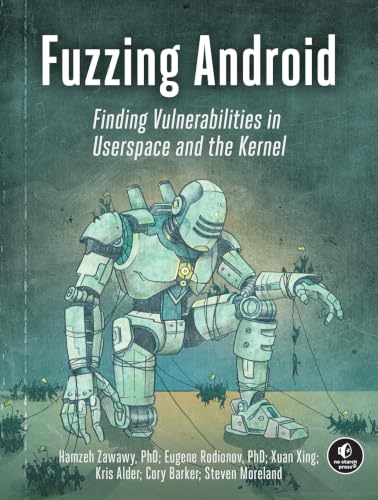
Fuzzing Android is a practical guide to discovering software vulnerabilities across Android's userspace components and Linux kernel. Written by six experienced security researchers, it explains how to
Free forever. No account needed — your reading progress is saved in this browser.
Android security depends on many interconnected components, from system services and native libraries to hardware-facing drivers and the Linux kernel. Finding weaknesses in these layers requires more than general security knowledge. It calls for systematic testing, effective tools, and the ability to understand unexpected software behavior. Fuzzing Android: Finding Vulnerabilities in Userspace and the Kernel provides a practical introduction to this process. The authors explain how fuzz testing works and how researchers can prepare Android devices and development environments for security testing. Readers are introduced to fuzzing frameworks and tools, including AFL++, libFuzzer, and Syzkaller. The book progresses from foundational concepts to hands-on testing techniques. It covers Android architecture and security, selecting promising targets, writing fuzz harnesses, collecting test inputs, and measuring code coverage. It also examines crash analysis and bug triage, helping readers understand how to reproduce failures, distinguish meaningful vulnerabilities from ordinary errors, and assess their potential severity. Advanced sections explore Binder services, Android system components, kernel fuzzing, and custom kernel drivers. The book also considers host-based testing and the emerging role of artificial intelligence in automating parts of the fuzzing process. Rather than focusing only on theory, the material connects security concepts with practical workflows and development tools. Examples and structured explanations help readers understand how vulnerability research is conducted across different Android layers. This book is suitable for application security professionals, Android developers, vulnerability researchers, OEM security engineers, and bug bounty hunters who want to develop deeper technical skills. Readers should have programming experience and access to an Android device or emulator. It covers Android 17 and is designed to remain relevant to earlier Android Open Source Project releases.








 Real Novels