Home / Gothic & Horror / The Spacecraft Hacker’s Handbook: Exploiting Ground Stations, Flight Software, and Satellite Terminals
Gothic & Horror
A practical guide to cybersecurity in modern space systems, this book explores vulnerabilities across spacecraft flight software, ground stations, satellite communications, and terminals. Through tech
Free forever. No account needed — your reading progress is saved in this browser.
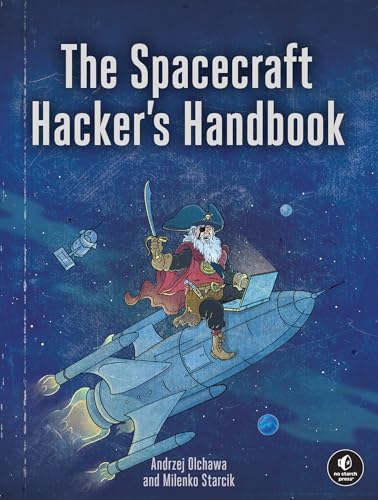
Satellites support essential technologies, from GPS navigation and weather forecasting to communications and defense. Protecting these systems requires an understanding of the specialized software, protocols, and infrastructure that connect spacecraft to the ground. The Spacecraft Hacker’s Handbook examines this important and technically challenging area of cybersecurity. Authors Andrzej Olchawa and Milenko Starcik take readers through the security landscape of modern space missions. The book explores vulnerabilities in spacecraft flight software, mission-control environments, satellite communication systems, and user terminals. Rather than focusing only on theory, it combines technical discussion with practical laboratory exercises designed to demonstrate how weaknesses can be identified and evaluated in controlled environments. Readers are introduced to mission-control platforms such as Yamcs and OpenC3 COSMOS, NASA flight-software frameworks including F′ and the core Flight System (cFS), and CCSDS communication protocols. The coverage also includes SATCOM terminals, GNSS-related attacks, and methods for reproducing documented space-cybersecurity scenarios safely. The book emphasizes the process of discovering, validating, and responsibly disclosing vulnerabilities. Its practical approach helps connect system architecture and protocol knowledge with security assessment techniques. This handbook is intended for cybersecurity researchers, penetration testers, aerospace engineers, spacecraft operators, and students interested in space technology. Readers should have a basic ability to understand source code in Python, Java, and C. The exercises are designed for Windows, macOS, or Linux environments using Docker and virtualization; specialized satellite radio hardware is not required. It offers a focused technical resource for understanding the security challenges facing the infrastructure that operates beyond Earth



 Real Novels