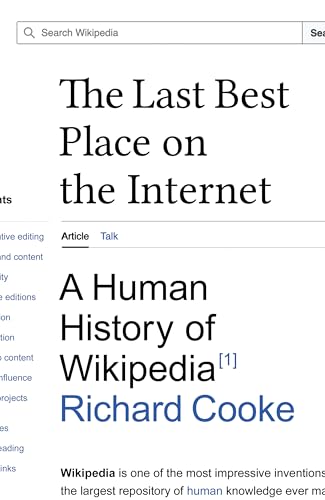
Home / History / The Last Best Place on the Internet: A Human History of Wikipedia
History
Discover the remarkable human story behind Wikipedia, the global encyclopedia built through collaboration and shared knowledge. Richard Cooke explores its origins, extraordinary growth, cultural influ
Free forever. No account needed — your reading progress is saved in this browser.
What happens when millions of people come together to build the world's knowledge, one contribution at a time? In The Last Best Place on the Internet: A Human History of Wikipedia, journalist Richard Cooke explores the fascinating history of Wikipedia, examining how an ambitious collaborative project became one of the most influential sources of information in modern life. Through extensive research, reporting, and interviews, Cooke takes readers behind the familiar encyclopedia pages to discover the personalities, disagreements, innovations, and unexpected decisions that shaped its development. The book examines the people who dedicate their time to creating and maintaining articles, often without recognition or financial reward. Beyond its origins and remarkable expansion, the narrative investigates Wikipedia's wider influence on politics, business, literature, culture, and public understanding. It also explores important questions about truth, authority, reliability, and who gets to decide which information deserves to be preserved. Readers are introduced to the passionate disagreements between inclusionists and deletionists, the challenges of maintaining a shared knowledge resource, and the growing pressures created by automated bots, political divisions, and artificial intelligence. Rather than presenting Wikipedia simply as a technological achievement, Cooke examines it as a deeply human project, shaped by cooperation, ambition, conflict, curiosity, and imperfect decision-making. This book is particularly suitable for readers interested in internet history, digital culture, journalism, technology, media studies, and the social impact of online communities. It will also appeal to Wikipedia contributors and anyone curious about how collective knowledge is created and protected in the digital age.

 Real Novels