Home / Gothic & Horror / Fuzzing Android: Finding Vulnerabilities in Userspace and the Kernel
Gothic & Horror
A practical guide to discovering security weaknesses in Android through fuzz testing. Written by engineers and researchers with experience in Android security, this book explains how to build testing
Free forever. No account needed — your reading progress is saved in this browser.
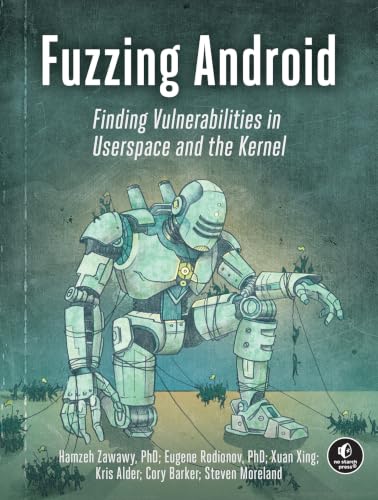
Android’s complexity and widespread use make its security a demanding challenge. Fuzzing Android: Finding Vulnerabilities in Userspace and the Kernel explores how researchers can uncover weaknesses in the platform by feeding software unexpected, malformed, or carefully structured inputs and examining how it responds. Written by members of the Android security research community, the book moves from foundational fuzzing concepts into practical testing workflows. It covers preparing Android environments using physical devices and emulators, configuring fuzz targets, and working with the tools needed to test system components. Readers are introduced to important attack surfaces, including Binder inter-process communication, native Android services, GPU drivers, and kernel interfaces. The material also addresses coverage-guided testing with AFL++ and libFuzzer, as well as kernel fuzzing with Syzkaller. Further topics include reproducing crashes, investigating failures, and assessing whether a discovered issue represents a genuine security vulnerability. The book connects testing techniques with the practical work of vulnerability research. Its examples and workflows are intended to help readers understand not only how to run fuzzing campaigns, but also how to select targets, interpret results, and investigate problems systematically. This technical guide is suitable for Android security researchers, penetration testers, bug bounty hunters, operating-system developers, OEM security engineers, and advanced programmers interested in mobile platform security. Familiarity with Android development, C or C++, and low-level systems concepts will be useful when following the practical material.





 Real Novels